
The Generational Smile Shift:
How Cosmetic Dentistry Changes Throughout Your Life
A beautiful smile means something different at 25 than it does at 55—or 75.
While every patient wants to look their best, the reasons people seek cosmetic dentistry evolve with age. Our teeth naturally change over time. They wear down, darken, shift position, lose support, and sometimes even affect the appearance of the lips and lower face. As these changes occur, cosmetic dentistry becomes about much more than simply making teeth whiter.
Understanding how smile goals change throughout life allows treatment to be tailored not only to your teeth—but also to your stage of life, your priorities, and your long-term health.
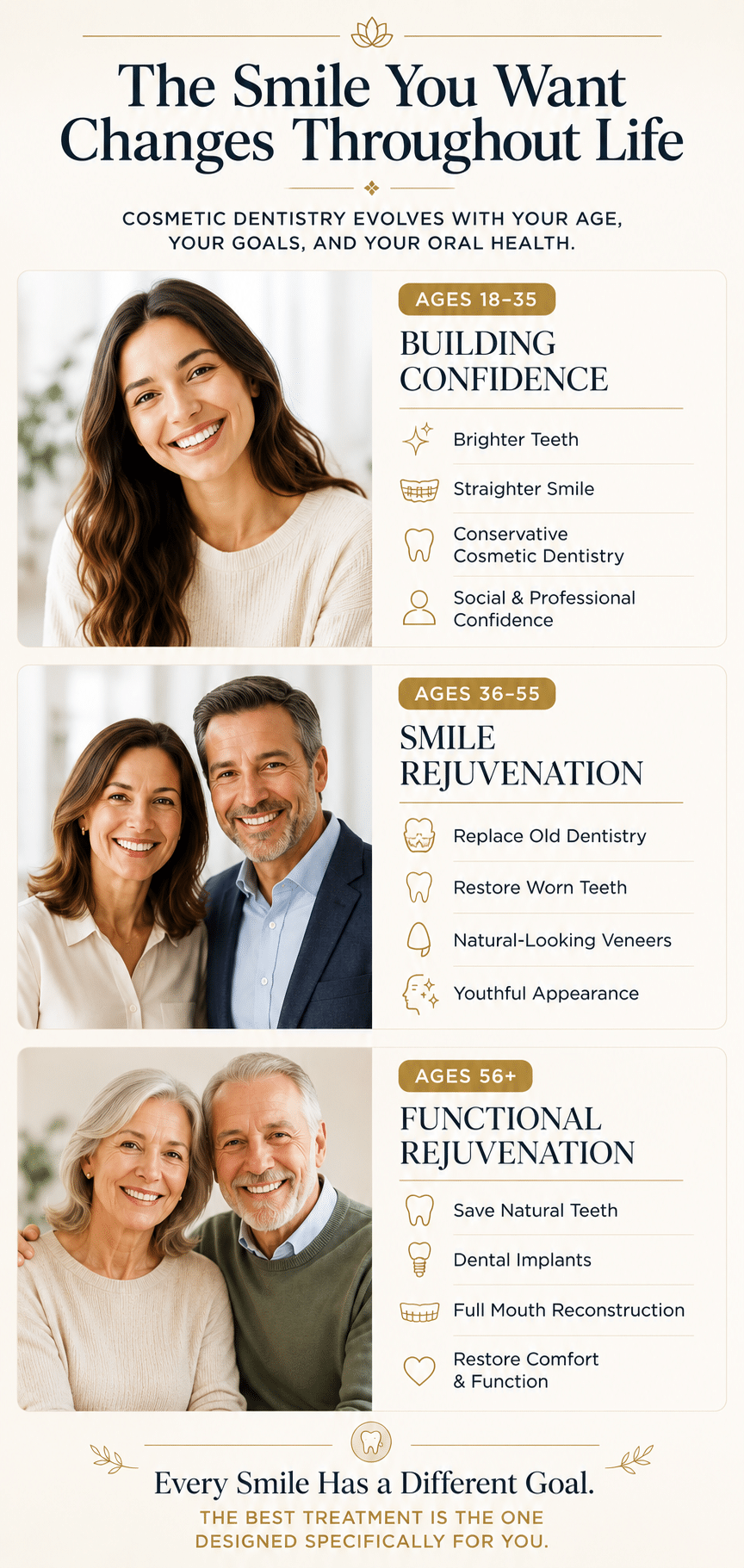

Ages 18–35
Building Confidence in the Digital Age
For younger adults, a smile is often closely connected to confidence, self-image, and professional presence. Social media, smartphones, and high-definition photography have made people more aware of even minor imperfections.
Many patients in this age group are looking for:
- Straighter teeth
- Brighter smiles
- Closing small spaces
- Repairing chips or uneven edges
- Conservative cosmetic improvements
Today’s younger patients are exceptionally well-informed. They often research treatment extensively before ever scheduling a consultation. While they appreciate immediate cosmetic improvements, the best long-term results come from preserving healthy tooth structure whenever possible.
For many patients, minimally invasive procedures such as professional whitening, conservative bonding, orthodontic correction, or carefully planned smile enhancement provide beautiful results while protecting their natural teeth for decades to come.
Ages 36–55
Looking Younger Without Looking Different
By midlife, cosmetic concerns begin to overlap with the natural aging process.
Years of chewing, grinding, coffee, wine, and everyday use begin to show. Teeth may appear shorter, darker, flatter, or uneven. Older dental work may no longer match surrounding teeth, and subtle changes in the bite can begin affecting both appearance and function.
Patients in this stage of life are usually seeking something very specific:
They want to look younger—not like they had cosmetic dentistry.
Natural proportions, facial harmony, and long-lasting materials become increasingly important.
Common treatments include:
- Porcelain veneers
- Replacing aging crowns and fillings
- Smile rejuvenation
- Correcting worn or uneven teeth
- Improving smile symmetry
Rather than chasing perfection, most patients simply want to restore the smile they once had—or the smile they always wished they had.
Ages 56 and Beyond
When Cosmetic Dentistry Becomes Reconstructive Dentistry
As we age, cosmetic dentistry often becomes inseparable from restorative dentistry.
Many patients experience decades of tooth wear, missing teeth, gum recession, bite changes, or collapsing dental support. These problems affect much more than appearance—they influence chewing ability, speech, facial support, comfort, and overall quality of life.
Interestingly, many patients initially schedule a consultation because they “don’t like how their smile looks.”
The real issue often turns out to be structural.
This stage of life frequently involves treatment such as:
- Full-mouth reconstruction
- Dental implants
- Comprehensive bite rehabilitation
- Replacement of failing dental work
- Saving natural teeth whenever possible
One of the most rewarding aspects of modern dentistry is that many teeth once considered hopeless can now be preserved through advanced treatment planning. Carefully selected teeth may sometimes be strengthened by connecting them to adjacent restorations or strategically placed dental implants, allowing patients to retain their natural teeth while improving long-term stability.
For some adults with complex bite problems—including selected underbite cases—highly specialized non-surgical treatment may also be an alternative to extensive jaw surgery. Techniques such as the Kurpis Method™ were developed specifically for carefully selected adult patients whose anatomy and bite relationships make them candidates for this type of treatment. Every case requires comprehensive examination and bite analysis before determining whether this approach is appropriate.
Cosmetic Dentistry Is Different at Every Age
Although every generation has different priorities, one principle remains constant:
The best cosmetic dentistry is never about creating the “perfect” smile.
It is about creating the right smile for that individual—one that is healthy, functional, natural-looking, and designed to complement their face and stage of life.
At age 25, success may mean a brighter, straighter smile.
At age 45, it may mean reversing years of wear while maintaining a natural appearance.
At age 70, it may mean restoring comfort, preserving natural teeth whenever possible, rebuilding facial support, and enjoying the confidence that comes from smiling comfortably again.
Great cosmetic dentistry is not defined by age.
It is defined by understanding what each patient truly values—and designing treatment that respects both beauty and biology.