< Previous | Contents | Next >
Cosmetic Dentistry from the Beginning
T
hroughout human history, the importance of caring for teeth and enhancing of the individ- ual smile has been important. As early as 3000-2500 B.C., the procedures for saving teeth was evidenced by skulls found containing teeth con- nected together with gold
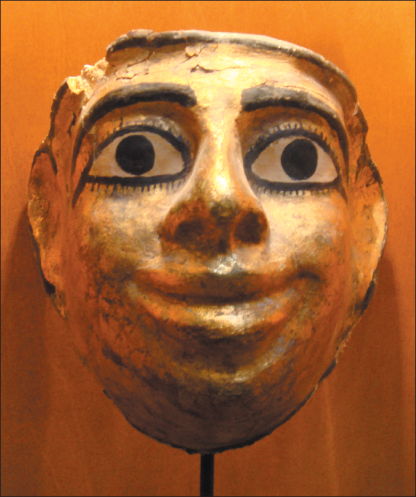
wires. The smile was so important that wealthy Egyptians even depicted their smiles on golden mummy masks found in ancient tombs. (See photo 1). Primitive fixed dental bridges made from gold bands and human teeth have been found on Etruscan skulls in what is now Tuscany, Italy, as early as 500 B.C.
Polished semi-precious stones and sea shells have been found implanted into the jaw bones of early Pre-Columbian Indians throughout the Americas. Gold appliances found on skulls may have been used to strengthen loose teeth or improve the cosmetic appearance of these ancient people. Cosmetic enhancement of Mayan teeth was performed by placing semi-precious stones in the middle of the upper and lower teeth. (See photo 2)
The Persian Middle Ages were also a time of advances in cosmetic dentistry. Teeth made of ivory have been found implanted in skulls of the wealthier classes. The first known set of remov- able false teeth was fabricated during the six-
photo 1
Cosmetic Dentistry from the Beginning

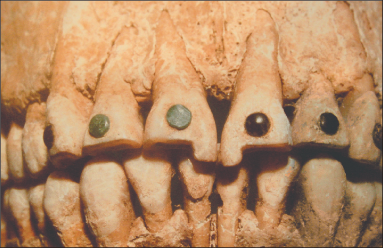
photo 2
teenth century. By the 18th century, false teeth made of ivory and human teeth were in wide- spread use among the aristocracy. These advances were advertised in local newspapers.
Cosmetic dental procedures aimed at improving smiles continued to be performed dur- ing the 18th and 19th centuries. In 1789 the very first American born dentist, Dr. Isaac Greenwood, placed advertisements in the Boston newspaper, The Continental Journal advertising his cosmetic dental procedures. His son, Dr. John Greenwood, who later became famous for being George Washington’s dentist, advertised his tooth trans- plant procedure as well. (see photo 3). By the early 20th century, dental materials and techniques improved, bringing costs down and making cos- metic dentistry available to the growing middle class. More people could now take advantage of cosmetic dental procedures. As demand for these procedures increased, many dentists started to devote their entire practice to cosmetic dentistry. These professionals became known as cosmetic den- tists.
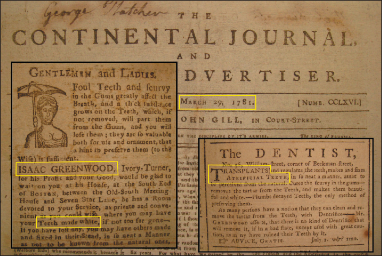
photo 3
With the establishment of the American Academy of Cosmetic Dentistry and the growing popularity of cosmetic prodedures, cosmetic den- tistry became a focal point in American culture. As 20th century culture evolved, new emphasis was placed on beauty and appearance. Nowhere
CHAPTER 0NE

else was it noted more than in the American smile. In magazines, in movies, and even on every television show, our media icons were all display- ing that attractive “Hollywood Smile.” By the 21st century, cosmetic makeover reality shows brought cosmetic dentistry procedures into our homes. The era of the AMAZING SMILE emerged.

5

CHAPTER TWO

This chapter from Amazing Smiles Through Cosmetic Dentistry explains or demonstrates next > as part of Dr. Albert J. Kurpis’s broader cosmetic dentistry approach to improving smile balance, appearance, and confidence.
The right treatment depends on the condition of the teeth, gums, bite, facial balance, smile goals, and a professional examination. Similar-looking smile problems may require different solutions.
Cosmetic dentistry is designed to improve the appearance of the teeth and smile. For many patients, a more balanced and attractive smile can also improve confidence in social, personal, and professional situations.
Use the related chapter links on this page to explore similar cosmetic dentistry cases, porcelain veneer examples, dental implant topics, bite correction cases, and full mouth reconstruction chapters.
Swipe left or right on mobile to move between book pages.