< Previous | Contents | Next >
Miracles in Two Visits The Porcelain Veneer
ince the majority of smile makeovers today involve porce- lain veneers, this revolutionary procedure warrants special attention. Although porcelain veneers (porcelain laminates) have been around since the 1980s, their popularity did not materialize until years later. A
series of cosmetic makeover television shows and news reports revealed the benefits and showcased the dramatic difference they made. The results from smile makeovers with porcelain veneers are always astounding and amazing.
What makes porcelain veneers so attractive is two fold:
1) they can dramatically change a smile in as little as two dental visits; and
2) the procedure is virtually painless.
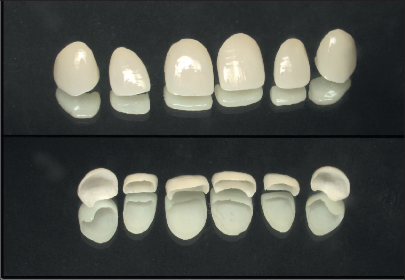
Even the most fearful patient can comfort- ably have a new smile in a short period of time with porcelain veneers. As mentioned in chapter three, porcelain veneers are thin eggshell-like pieces of porcelain that can be made in any color, shape or size. They are only about one millimeter or less in thickness (figure 48).
In order to receive veneers, the teeth need to be decay free with a minimal thickness of enamel
figure 48
Miracles in Two Visits- The Porcelain Veneer

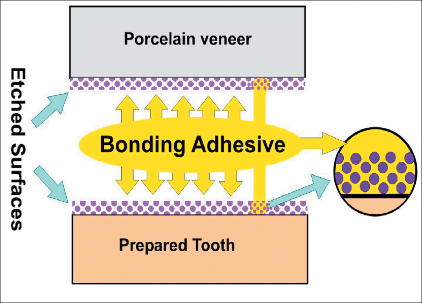
figure 49
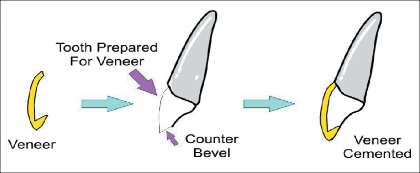
figure 49b
present. The reason enamel is needed, even after some minor tooth reduction, is because the porcelain veneer adheres to the tooth through its enamel.
When porcelain veneers come back from the dental lab, they are highly glazed on the out- side. The inside (the side that will be adhering to the tooth) is micro-porous and frosty looking. This frosty appearance was created by application of an acid at the dental lab.
The cosmetic dentist will use a safe milder acid in the mouth to quickly etch the remaining enamel on the prepared tooth to receive the veneer. Once etched, the tooth surface has micro- pores; with both surfaces etched (figure 49), a liq- uid composite resin is used to cement the etched veneer to the etched tooth.
If not enough enamel is present on the tooth, or not enough tooth structure is available, the porcelain veneer will not adhere to the tooth, and may fall off during function. In order to add additional strength and stability to porcelain veneers, the teeth are prepared over the incisal edges and wrapped onto the lingual surfaces. This process is known as a counter bevel. (figure 49b)
CHAPTER FOUR

Here is an actual case study of a typical porcelain veneer smile makeover takes place:
This patient has unsightly maxillary teeth. Her objective is to eliminate the spaces between her teeth and get rid of the “gummy” smile look. (figure 50)
After administration of local anesthetic, her maxillary gums and bone are reduced and allowed to heal for six weeks. (figure51)
Once the gums are healed, the eight maxil- lary teeth are prepared for porcelain veneers. (figure 52)
A dental impression of the prepared teeth is taken and sent to the lab. Temporary bonded veneers are made for the patient to wear for one week. (figure 53)
In the lab, the ceramist makes the individual veneers by hand, carefully coloring each one to simulate natural tooth structure. They are then fired in a porcelain oven at over 2000 degrees fahrenheit until they turn into a glasslike sub- stance. They are now ready to be returned to the cosmetic dentist. (figure 54).
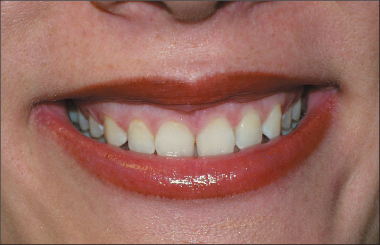
figure 50
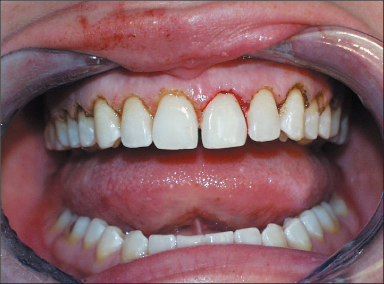
figure 51
Miracles in Two Visits- The Porcelain Veneer

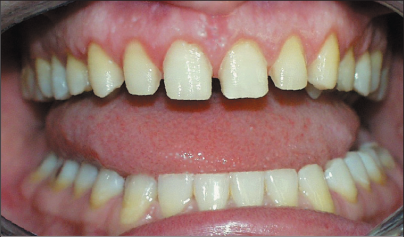
figure 52
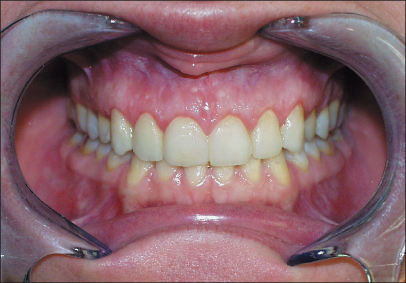
figure 53
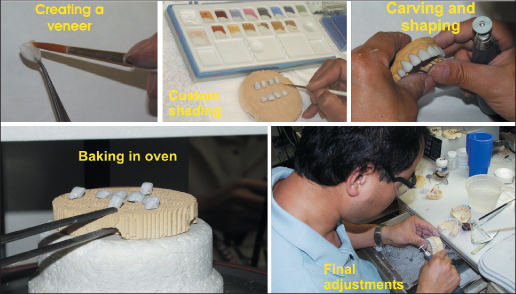
figure 54
CHAPTER FOUR

Upon receipt of the veneer, the cosmetic dentist tries the veneer on the prepared teeth to check the fitting and get the patient’s esthetic approval. This is the patient’s final opportunity to make changes. At this point the veneer can still be sent back to the lab for corrections. (figure 55).
Once approved by the patient, the cosmetic dentist etches each tooth with a mild acid. (figure 56). The dentist then applies a bonding adhesive to the inside of each porcelain veneer. (figure 56b).
The veneer is placed on the etched tooth and cured with a high wavelength curing light for several seconds. (figures 57)
The excess adhesive is removed and the bite (occlusion) is adjusted. The final veneers are now complete. The spaces are eliminated and the “gummy smile” look is gone. The smile makeover is brought to a successful conclusion. (figure 58).
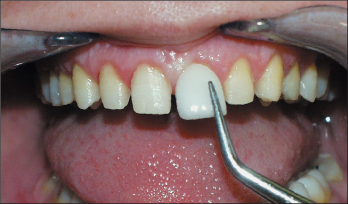
figure 55
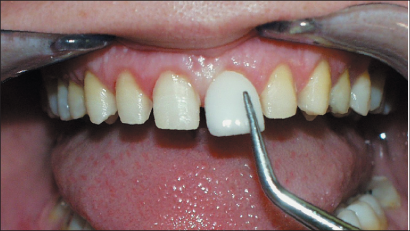
figure 56
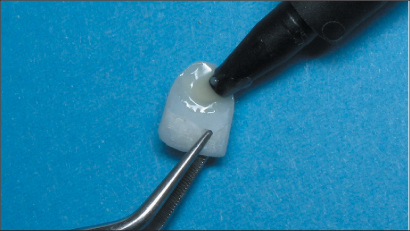
figure 56b
Miracles in Two Visits - The Porcelain Veneer

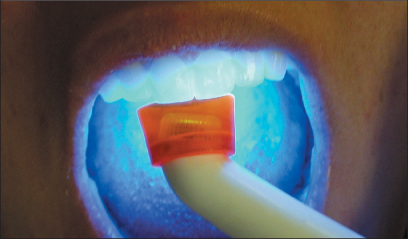
figure 57
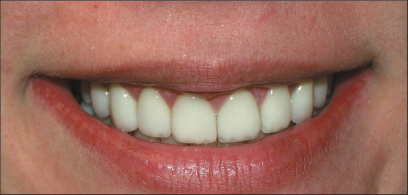
figure 58
CHAPTER FIVE

M
This chapter from Amazing Smiles Through Cosmetic Dentistry explains or demonstrates miracles in two visits the porcelain veneer as part of Dr. Albert J. Kurpis’s broader cosmetic dentistry approach to improving smile balance, appearance, and confidence.
The right treatment depends on the condition of the teeth, gums, bite, facial balance, smile goals, and a professional examination. Similar-looking smile problems may require different solutions.
Cosmetic dentistry is designed to improve the appearance of the teeth and smile. For many patients, a more balanced and attractive smile can also improve confidence in social, personal, and professional situations.
Use the related chapter links on this page to explore similar cosmetic dentistry cases, porcelain veneer examples, dental implant topics, bite correction cases, and full mouth reconstruction chapters.
Swipe left or right on mobile to move between book pages.